More accurate than Loihi 2, with a quarter of the neurons
N4 scores 92.58% on Spiking Heidelberg Digits on our FPGA board using 128 adaptive neurons, against 90.9% for Intel's Loihi 2 with 512, and like a brain it only does work when its input changes.
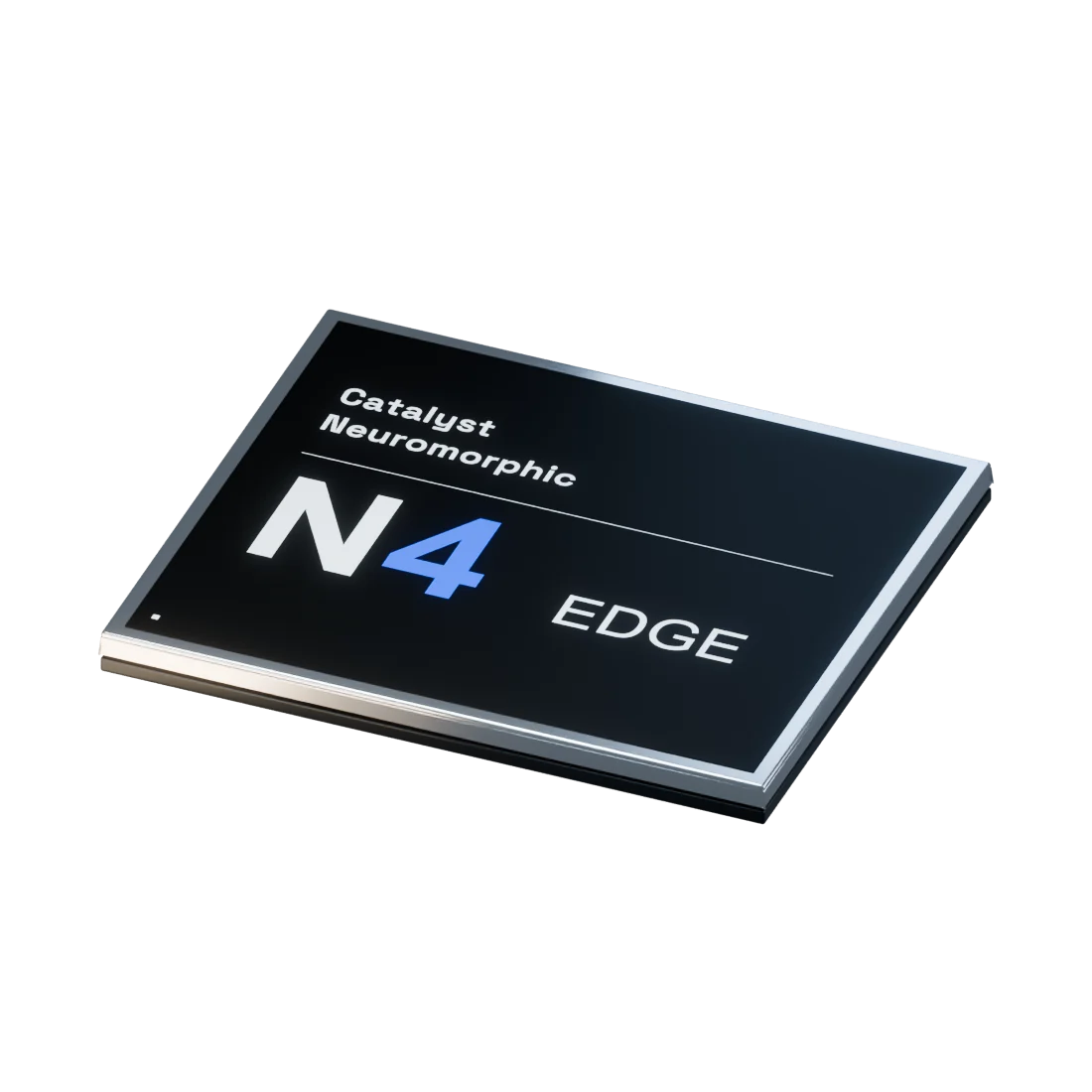
Quiet until something happens
A microphone on a hillside hears wind and silence for most of the day, a conventional processor works through every one of those moments regardless, whereas our chip only does work when the sound changes, so the moment that matters gets its full attention.
Results
On Spiking Heidelberg Digits on our AMD Kria KV260 board, all 2,264 test clips, with 128 adaptive neurons against the 512 Intel used for Loihi 2’s 90.9%.
Estimated per inference for our most accurate speech network, 15 to 33 times less switching energy than Loihi 2’s published 0.36 mJ.
Estimated for always-on speech at room temperature, thousands of times below an NVIDIA Jetson Orin module at 7 to 60 W.
Held on one chip and switched between on the chip, so the same part can listen, watch and check a machine.
To load a full 1.5 million connection model, about 120 times faster than programming it from the host.
Every spike and every neuron value replays exactly, so you can prove what the chip computed.
Against Intel Loihi 2
| Catalyst N4 | Intel Loihi 2 | |
|---|---|---|
| Spiking Heidelberg Digits | 92.58%, all 2,264 test clips on our FPGA board | 90.9% |
| Neurons | 128 | 512 |
| Neuron model | SE-adLIF, adaptive, built into the hardware | CUBA LIF with learned delays |
| Energy per inference | about 20 µJ, estimated | 0.36 mJ |
Inside N4-Edge*
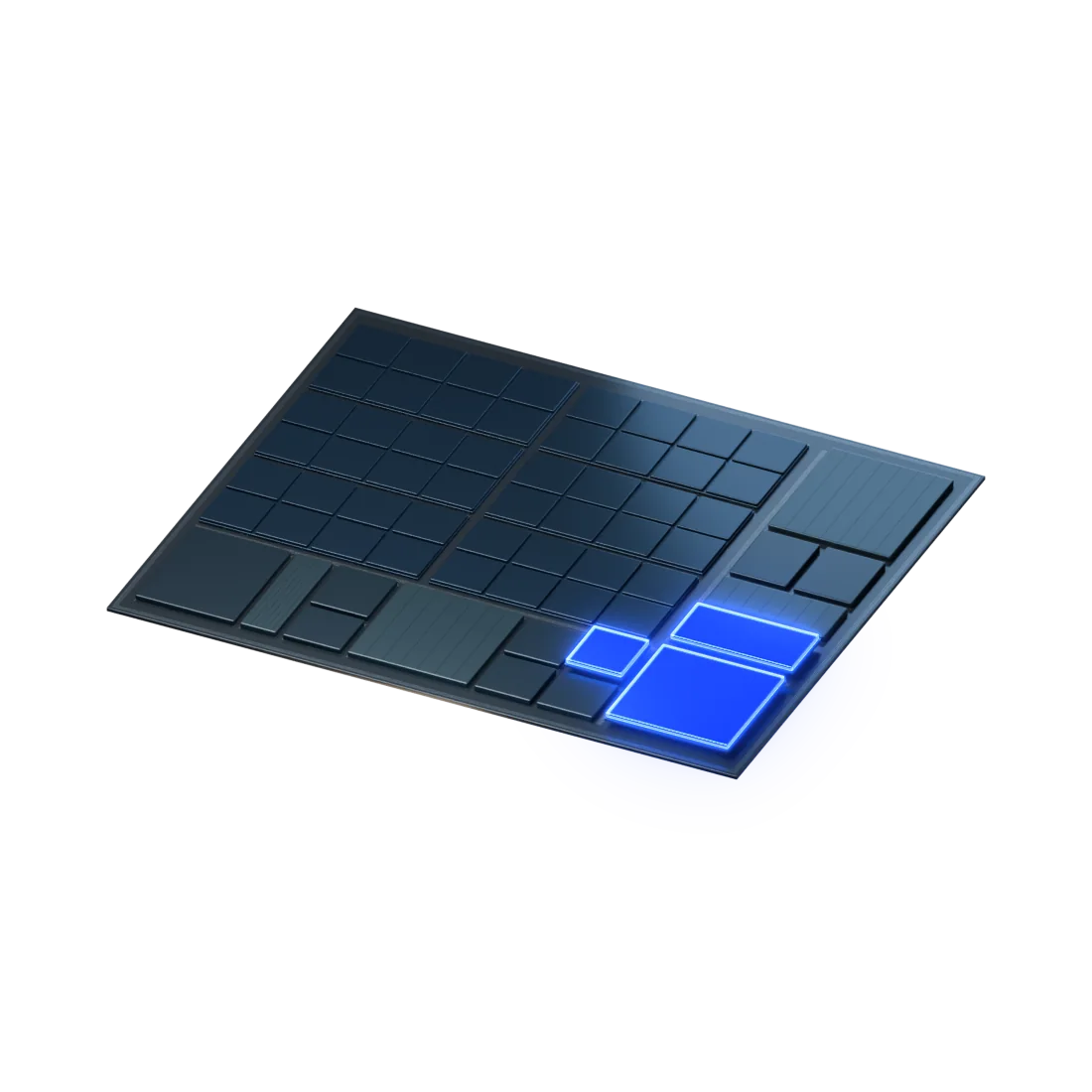
Neuromorphic Compute Tiles
Brain-inspired cores that react the instant something changes.
On-Chip Model Memory
Holds up to 32 networks and switches between them on the chip.
RISC-V Management Subsystem
Its own processor brings the chip up and keeps it running.
Host Interface
A single link to the device it lives in.
Direct Sensor Interfaces
Sensors wire straight to the chip, with no host in between.
Always-On Power Domain
Stays awake so the rest of the chip does not have to.
Neuromorphic Compute Tiles
Brain-inspired cores that react the instant something changes.
On-Chip Model Memory
Holds up to 32 networks and switches between them on the chip.
RISC-V Management Subsystem
Its own processor brings the chip up and keeps it running.
Host Interface
A single link to the device it lives in.
Direct Sensor Interfaces
Sensors wire straight to the chip, with no host in between.
Always-On Power Domain
Stays awake so the rest of the chip does not have to.
From signal to decision
Sensor
A microphone, an event camera or an accelerometer produces a continuous signal, and most of it is quiet.
Events
The signal is turned into events, so only the moments where something changes carry forward.
Spiking network
The trained network sits on the cores, and only the neurons an event reaches are updated.
Decision
A result comes out of the chip and the machine acts on it, or the radio wakes because there is something worth sending.

Inside the design
Blue blocks run on our FPGA boards today, outlined blocks are in the design.
Sensor interfaces
Host interface
Strict request and response
Model memory
Up to 32 networks held, a new one loads in 0.94 s
Always-on domain
Neuromorphic fabric
48 cores on FPGA at 62.5 MHz, bit exact at every timestep
Neuron models
LIF, CUBA, adLIF and SE-adLIF, plus a programmable neuron
Spike delivery
Weighted, event driven
RISC-V management core
CVA6
Events out
Only when there is something worth sending
Telemetry
Every event counted, none dropped
Debug
On-chip learning
Specifications
Verified on hardware
- 92.58% on Spiking Heidelberg Digits on an AMD Kria KV260, 128 adaptive neurons
- Bit exact against the reference model on all 2,264 test clips
- 48 cores at 62.5 MHz on an AMD Virtex UltraScale+ VU47P
- Zero dropped events across more than 18 million routed
- Byte identical results across five successive builds
How far it scales
- 24,576 neurons and 1.5 million connections in the edge configuration, 24 times the neurons of SynSense’s Xylo
- 393,216 neuron fabric matched ideal maths on all 2,264 samples
- Up to 32 networks held and switched on the chip
- A 1.5 million connection model loads in 0.936 s
On the way to silicon
- First prototype on TSMC 22 nm through imec
- Production chip on its own 22 nm masks after that
- Tens of microwatts estimated for always-on speech at room temperature
- First fabricated silicon planned for 2027
Specification in full
| Dimension | Catalyst N4-Edge, on our FPGA | Target for 22 nm silicon |
|---|---|---|
| Compute | 48 neuromorphic cores at 62.5 MHz | same cores, sized for the die |
| Neuron models | LIF, CUBA, adLIF and SE-adLIF in fixed point, plus a programmable neuron | same |
| Neurons | 24,576 in the edge configuration, 393,216 in the largest build, which matched ideal maths on all 2,264 samples | set by the SRAM on the die |
| Connections | 1.5 million resident | set by the SRAM on the die |
| Model store | DDR4, a 1.5 million connection model loads in 0.936 s | model memory on the die, switchable in the field |
| Models resident | up to 32 networks held and switched on the chip, byte identical per context | same |
| Management core | CVA6 RISC-V | same |
| Host interface | PCIe and MMIO on AWS F2, AXI on the Kria K26 | SPI, QSPI and AXI, runs with no host |
| Sensor input | events injected by the host | AER in, event camera and acoustic front end |
| Determinism | bit exact against the reference model at every timestep, byte identical across five builds | carried forward by construction |
| Event integrity | zero drops across more than 18 million routed events | telemetry and counters kept as a product feature |
| Latency | each event is processed as it arrives | under a millisecond from event to decision |
| Energy and power | the Kria K26 module draws 3.58 W idle | about 20 µJ per inference and tens of microwatts always-on for speech at room temperature, estimated |
| Process | AMD FPGAs, AWS F2 and Kria K26 | TSMC 22 nm ULL through imec |
| Toolchain | train in PyTorch, quantise to 8-bit weights, check against the bit exact emulator, then place and program | same, plus adaptation on the device |
Four generations to N4
N1
Our first spiking processor, validated on FPGA hardware.
N2
Added programmable neuron models and an on-chip learning rule in the design.
N3
Split the design into tiles so it could scale.
N4
Built for the edge, and the design going to TSMC 22 nm.
From trained model to running chip
Train in PyTorch
Spiking networks are trained with surrogate gradients, in a framework engineers already know.
Check in simulation
Our reference simulator matches the hardware exactly, so what works in simulation works on the device.
Run on hardware
The same network runs on our FPGA boards today, bit for bit.
Put it in a product
N4-Edge silicon follows in 2027, built to run the same network unchanged.
Sources
- Spiking Heidelberg Digits accuracy: our AMD Kria KV260 board, all 2,264 test clips, November 2026. Event counts, timing and scale: our 48-core build on an AMD VU47P on AWS F2, July 2026.
- Energy and always-on power for N4-Edge are estimated from gate-level switching activity.
- Intel Loihi 2, 90.9% with 512 neurons and 0.36 mJ per sample: arXiv:2510.13757, Tables I and II.
- NVIDIA Jetson Orin, 7 to 60 W: NVIDIA module specifications.
- SE-adLIF neurons: published research from TU Graz, built into hardware by us.